Before the Second World War, the city of Osijek had around 40,000 citizens.
The multiethnic city was a home of the thin Croatian majority, followed by a large
population of ethnic Germans Serbs, Hungarians and Jews. While the Ustaše started to
take over the power in the city already on the 10th of April 1941, the German
military entered the city the day after. Immediately afterwards Jews were exposed
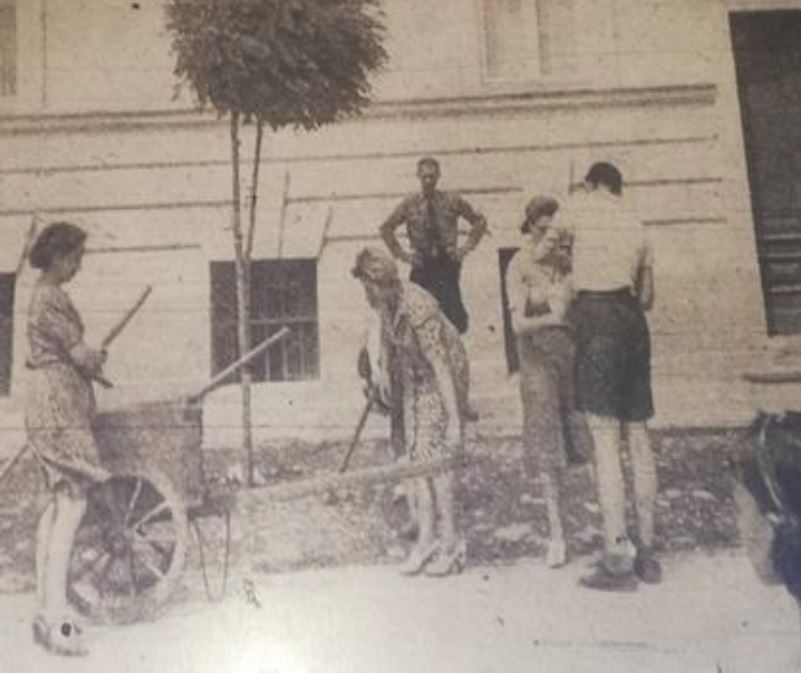
to a pogrom, arrests, forced labor, violence and organized extortion. Initially the
persecution of Jews was spearheaded by the members of the German minority in Osijek
and its surroundings.
The city of Osijek was one of the unique places in Europe during the Second World War where the
Jewish minority faced three fascist movements which coexisted simultaneously in a single
location – the German Nazis, Croatian Ustašas, and the Hungarian Arrow Cross. In the months
following the outbreak of the Second World War in Yugoslavia, the coexistence between various
ethnic groups started to fragment as the city came under the increasing pressure of quickly
emerging fascist organizations which competed for control over Jewish and Serbian property,
government buildings, and other important resources in the city.
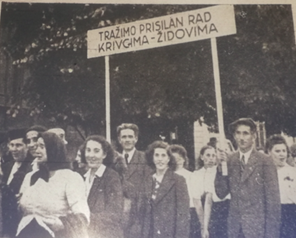
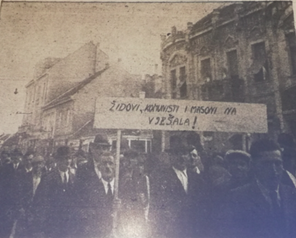
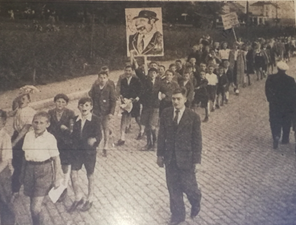
Together with the systemic discrimination, violence and extortion, Jews of Osijek also
faced antisemitism from below. A wave of antisemitic demonstrations were organized
by various political organizations during the spring and summer 1941.
These demonstrations transcended ethnic lines. The first antisemitic demonstration was
organized by the local ethnic Germans, only eight days after the German military entered
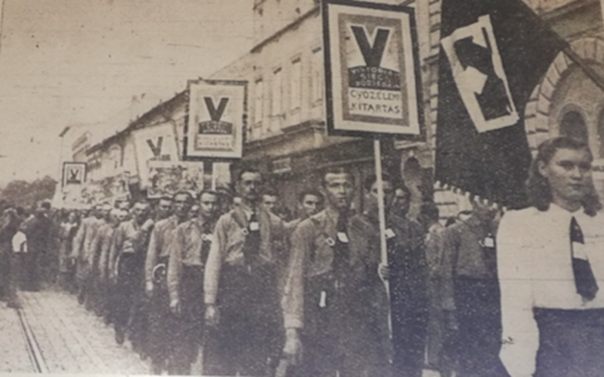
Osijek. One of the largest antisemitic demonstrations was organized on 5 July 1941 in
cooperation between the German National Group and the Ustaša movement. A large crowd
gathered and marched through the streets, carrying banners with messages such as “Jews,
Masons, and Capitalists are responsible for the war.”
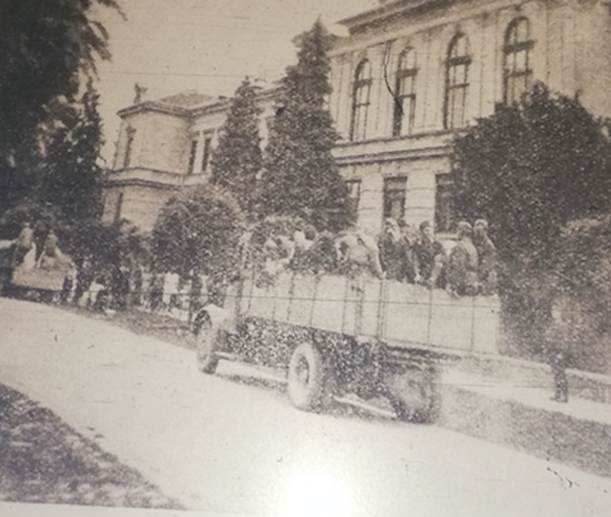
Mass arrests in preparation for large scale deportations in Osijek started on 30 July 1941. On this day 700 Jews and Serbs were arrested. Prisoners were kept in the makeshift detention center in Tvrđa
[The Fortress] – a Habsburg-built star fort from the eighteenth century. After additional
arrests and selections, these prisoners, which included up to 280 Jews were deported to the
Gospić concentration camp complex on 31 July and 7 August 1941. Only six Jews from these two
deportations survived the war. After these two large transports, the mass deportations in Osijek
came to a sudden halt. According to available sources the local authorities planned to establish
a ghetto in the suburb of Tenje just outside of the city of Osijek. This was the only instance of
ghettoization in the entire Intendent State of Croatia.
After the Tenje ghetto was built, it was suddenly turned into a transit camp where all the
remaining Osijek Jews were imprisoned in July 1942. Together with other remaining Jews
in Slavonia who were deported there at the same time, the prisoner population in the camp
swelled to 3500. The overwhelming majority of them were deported to Auschwitz, and a part
to Jasenovac death camps in August 1942.
The deportations of August 1942 amounted to a total of 4,927 Jews who were sent from
NDH to Auschwitz, including transports from Zagreb and Sarajevo. However,
the overwhelming majority came from Osijek and its surroundings. Roughly the entire
Jewish community of Osijek perished there, except around 500 Jews from Osijek who
were murdered in the Croatian death camps. Out of approximately 3,000 Jews who
departed from Osijek to Auschwitz, only around ten survived. After the August 1942
deportations, around 115 Jews remained in Osijek due to their “mixed marriage” status.
Another 300 or so managed to save themselves by emigrating to either Italy or Hungary
during the war. In total, no more than 450 Jews from Osijek and its surroundings
managed to survive the war.